Tag: .NET

  • Greentube Internet Entertainment

    As a generalist in the role of technical project manager, I was working with software projects from many perspectives – system integration, guiding the development, conceiving new solutions.

    Integrations of internal and external systems, scalability, system details knowledge, and having the big picture in mind all play a significant part in daily work.

    (more…)

  • Multiple Values For The Same GET or POST Parameter in ASP.NET MVC

    Multiple Values For The Same GET or POST Parameter in ASP.NET MVC

    There are situations where you need to pass multiple values for the same parameter to the server, here are some patterns.

    • Multiple checkboxes to pick the values for the same purpose.
      • Select columns to show in the table
      • Select post categories
    • User can add as much values as he/she likes.
      • Add new tag
      • Add language
    • User can remove multiple items from a list.
      • Remove items from shopping cart

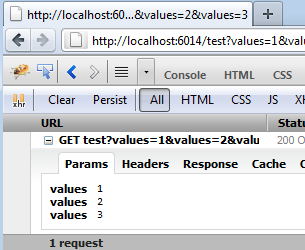
    This can be handled by passing many values in one parameter with a common delimiter, or by passing multiple values as the same parameter. Here are examples with the GET method, for the POST it works the same.

    (more…)
  • Run NUnit for the current VisualStudio project

    On a lot of projects, I use NUnit for unit testing, usually I create a separate project that contains only the tests.

    There tools that integrate fully with the Visual Studio, like ReSharper or TestDriven.NET, but they cost money and you can’t run them on Express editions.

    So I’ve made this useful shortcut to easily run it for the current (test) project. Screenshots are made on Microsoft Visual Studio 2010 Professional running on Windows 7.

    (more…)

  • Formatting date, time, currency in various cultures

    In today’s interconnected world, it’s important that online applications support different cultures.

    Even if most of us that spend a lot of time online are accustomed to the USA date and number formats, people always prefer to see numbers and dates formatted in a familiar way. People don’t like to think about if the date’s first digit is day or month, or if it’s decimal delimiter or digit grouping mark.

    The date 03/02/2010 means completely different thing in Australia and USA – it’s February the 3rd in the former and March the 2nd in latter! (dd/mm/yyyy vs mm/dd/yyyy)

    Even if we assume that the common internet user can read the shown format based on the website’s supposed location, localization and internationalization (i18n) could greatly improve readability and usability.

    (more…)
  • Pole Energy

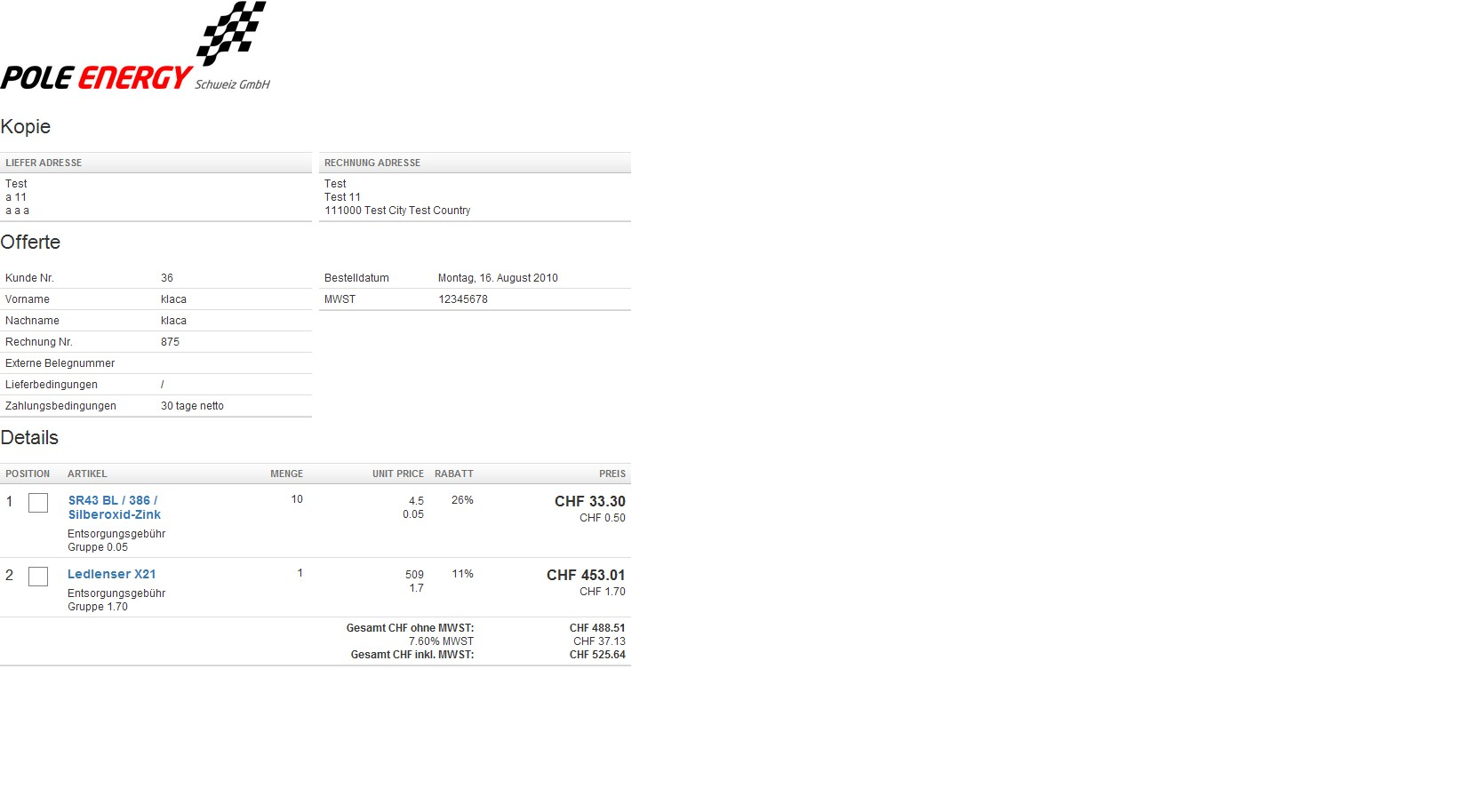
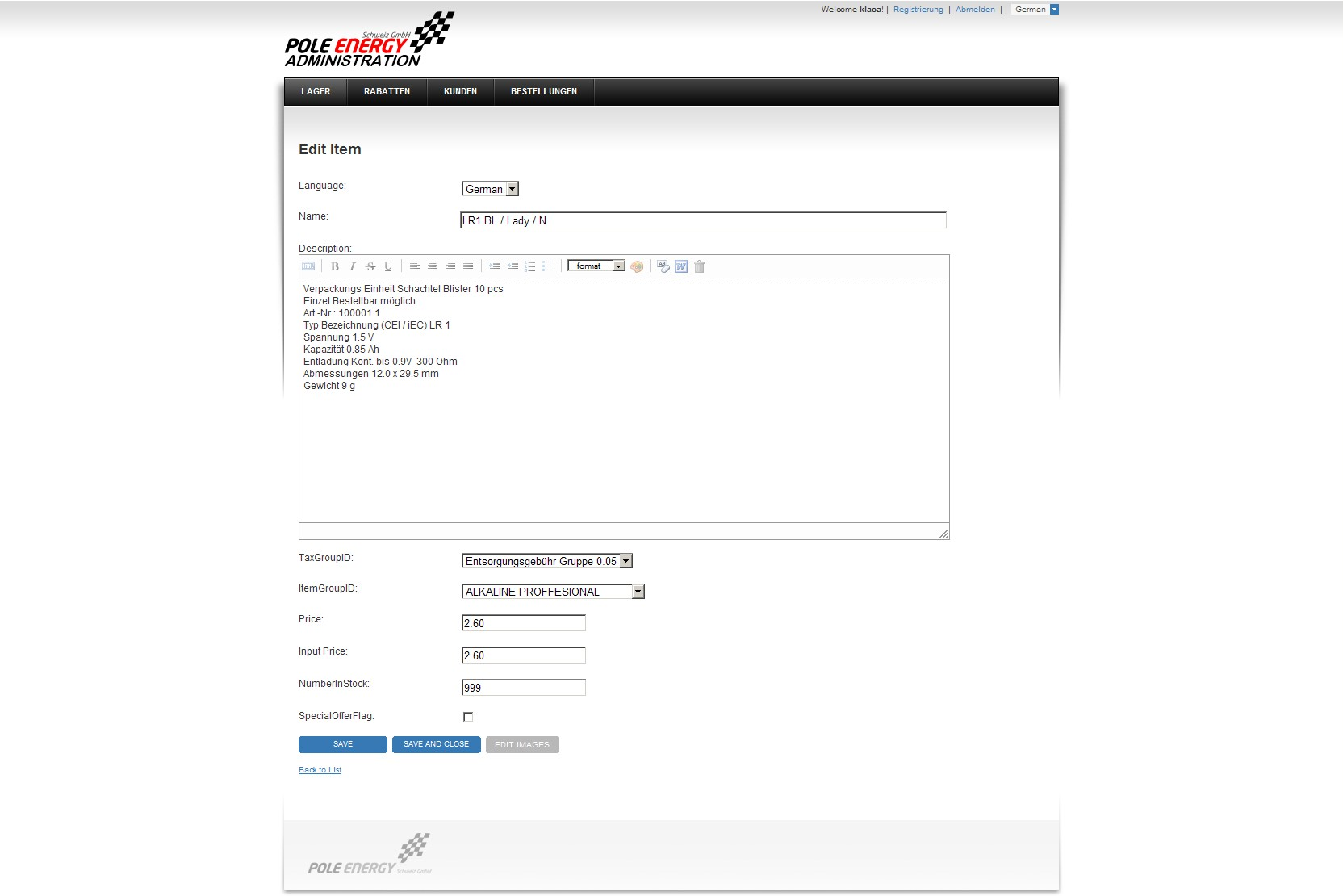
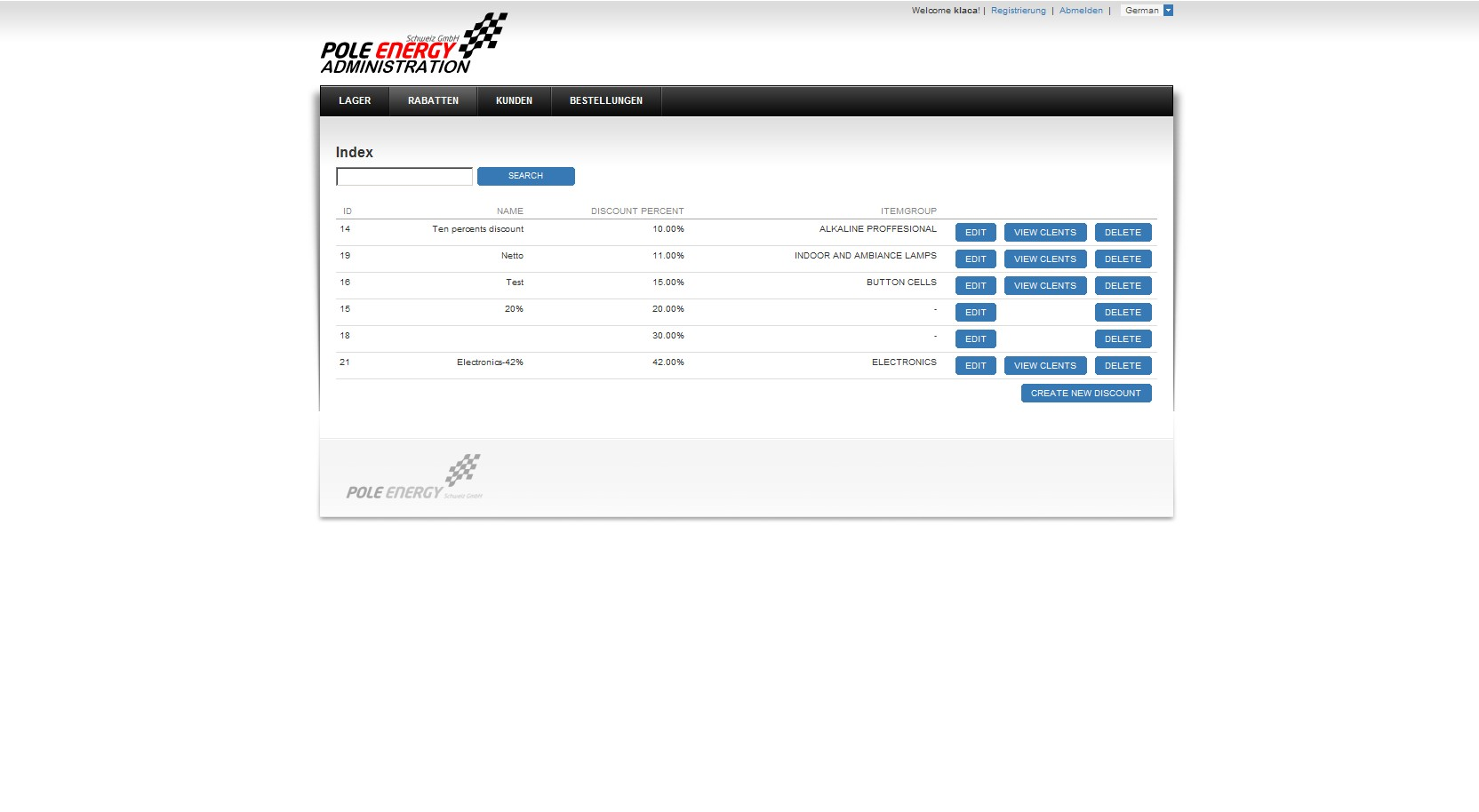
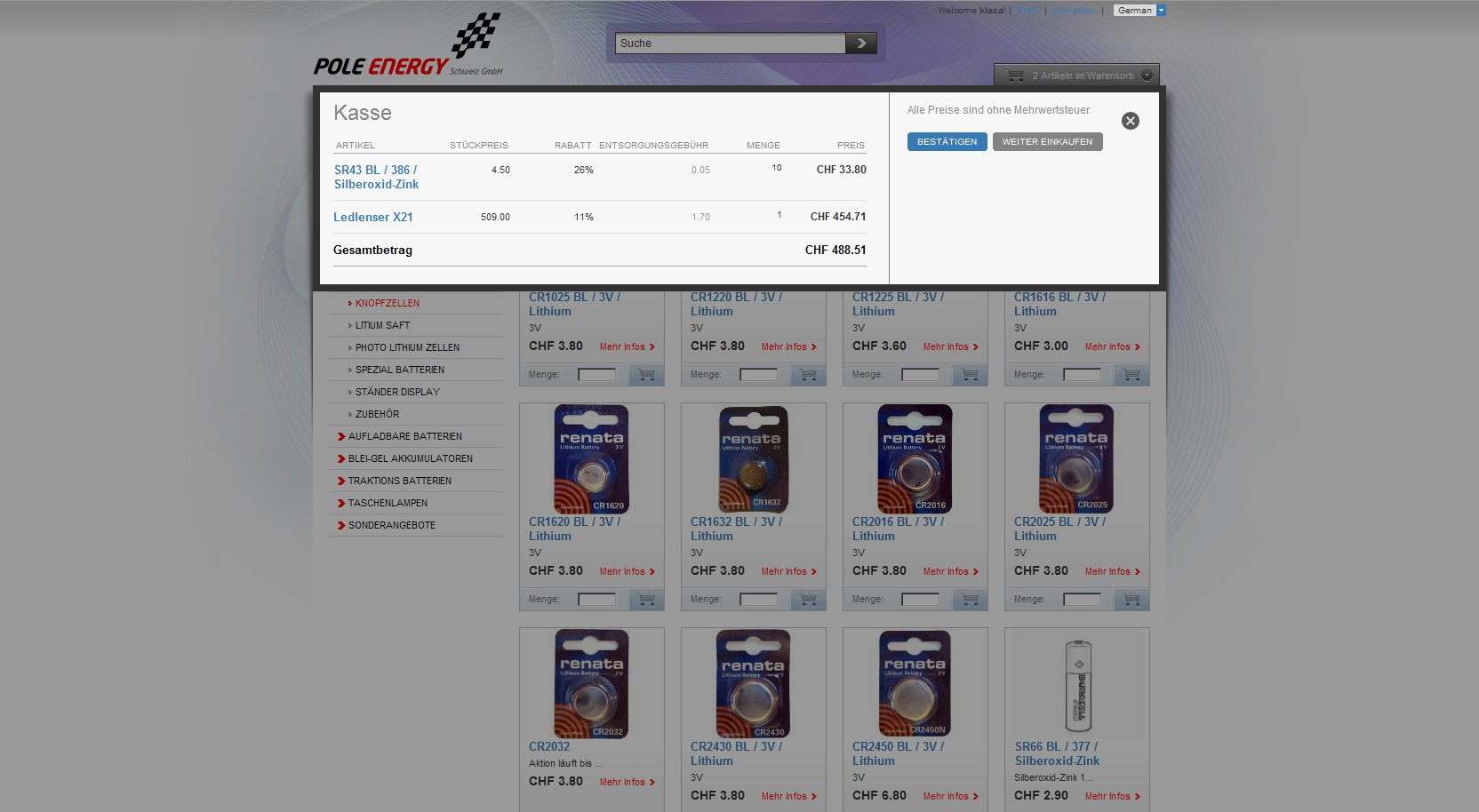
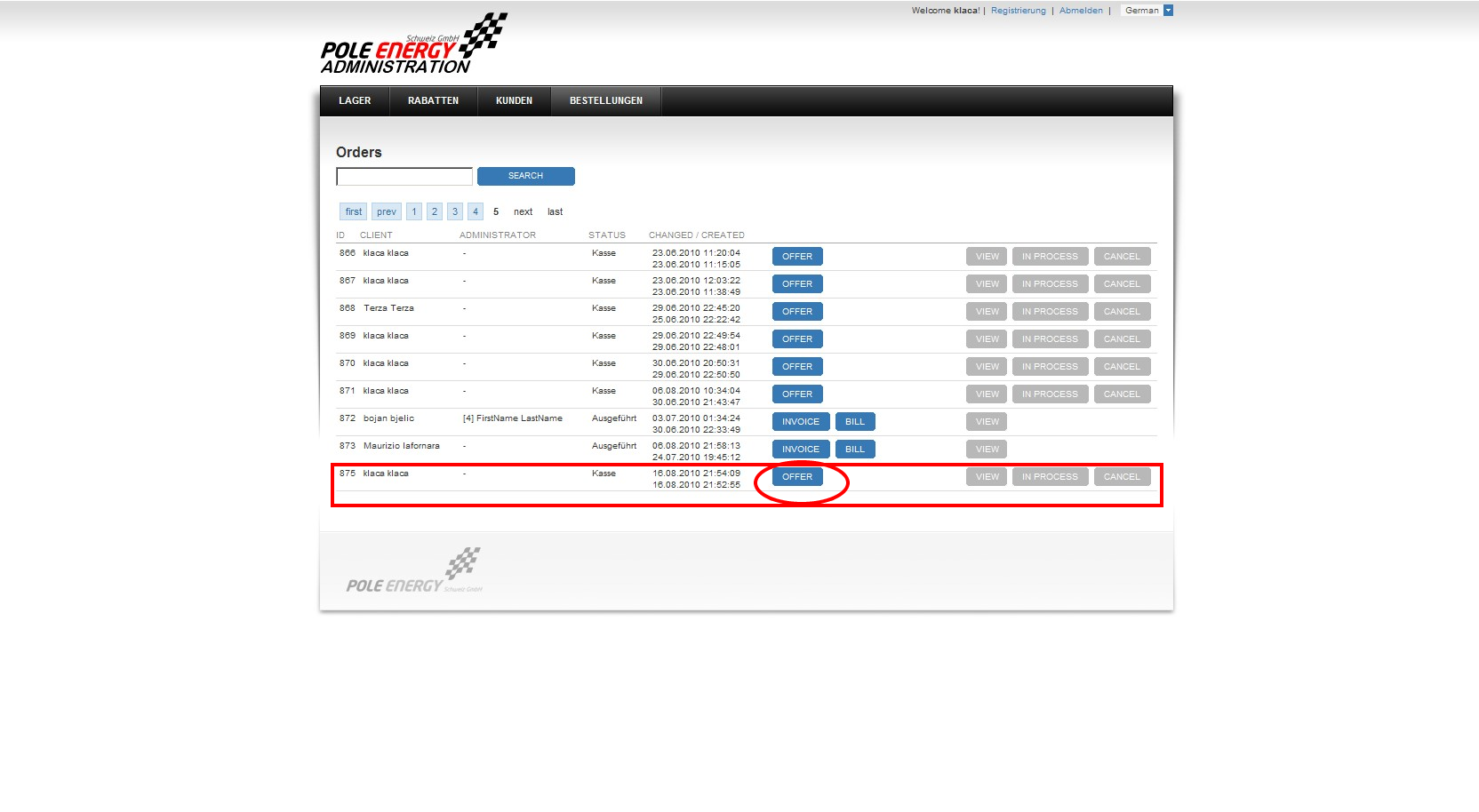
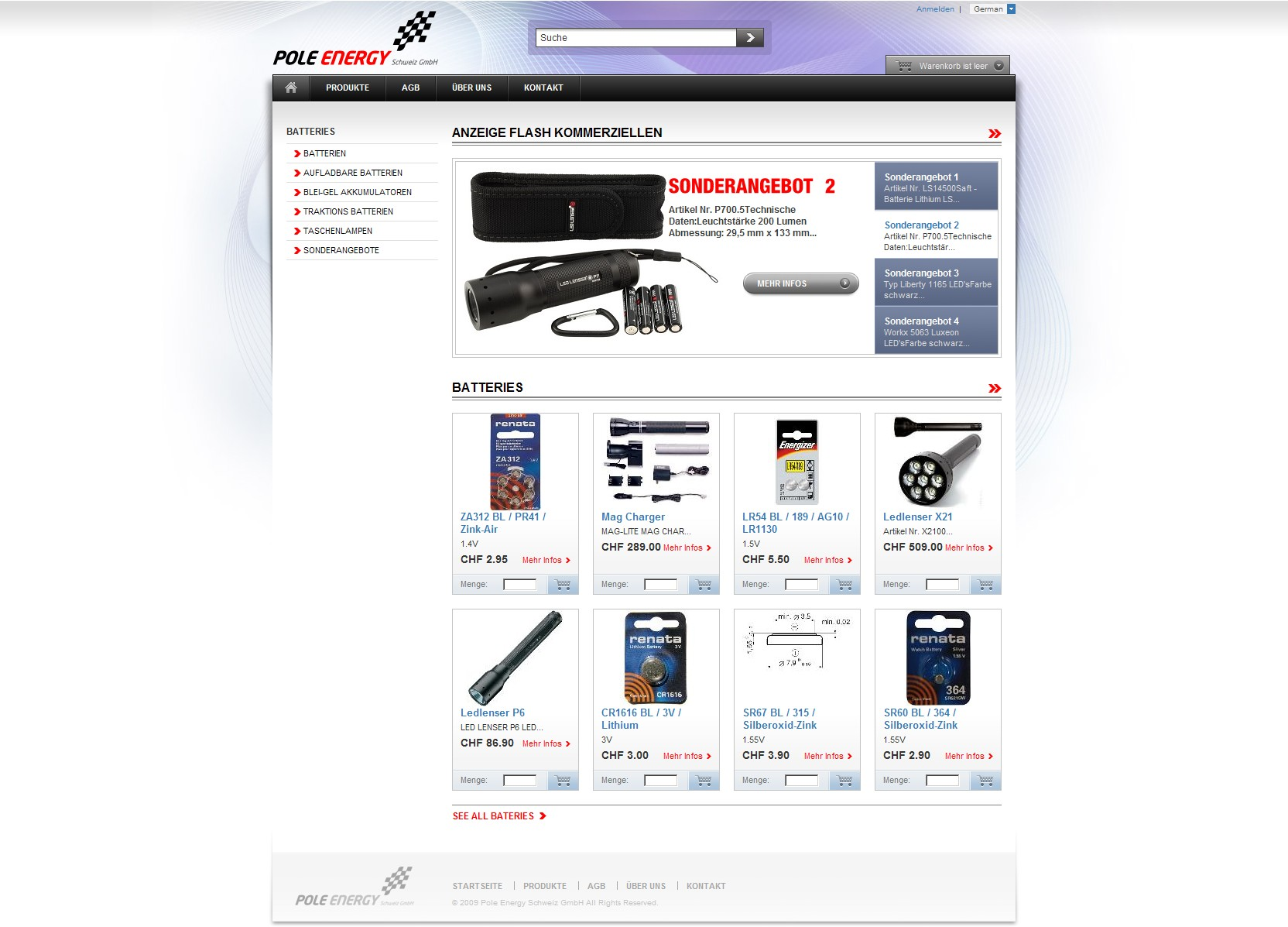
    The Pole Energy online shop project was truly interesting and creative, but on the other hand a big challenge as well.

    The goal was to create a secure, modern, multilingual online shopping application. It has taken about a year, from the initial idea until the full version, during 2009 and 2010, with the first release at the beginning of 2010.

    At the beginning of the project I have created the application architecture, entities, relations, and use cases. As we did agree to loosely follow Agile development process, the architecture was redesigned several times during the project.

    During the implementation, I have lead a crew of experienced developers in the effort to achieve high quality and performance.

    We have decided to go with the Microsoft stack, using ASP.NET MVC enhanced with jQuery to create the user interface, using Entity Framework, LINQ, and C# for the middle tier DAL (Data Access Layer), and Microsoft SQL Server as the back end.

    The project is successfully running on the cloud platform at www.poleenergy.ch

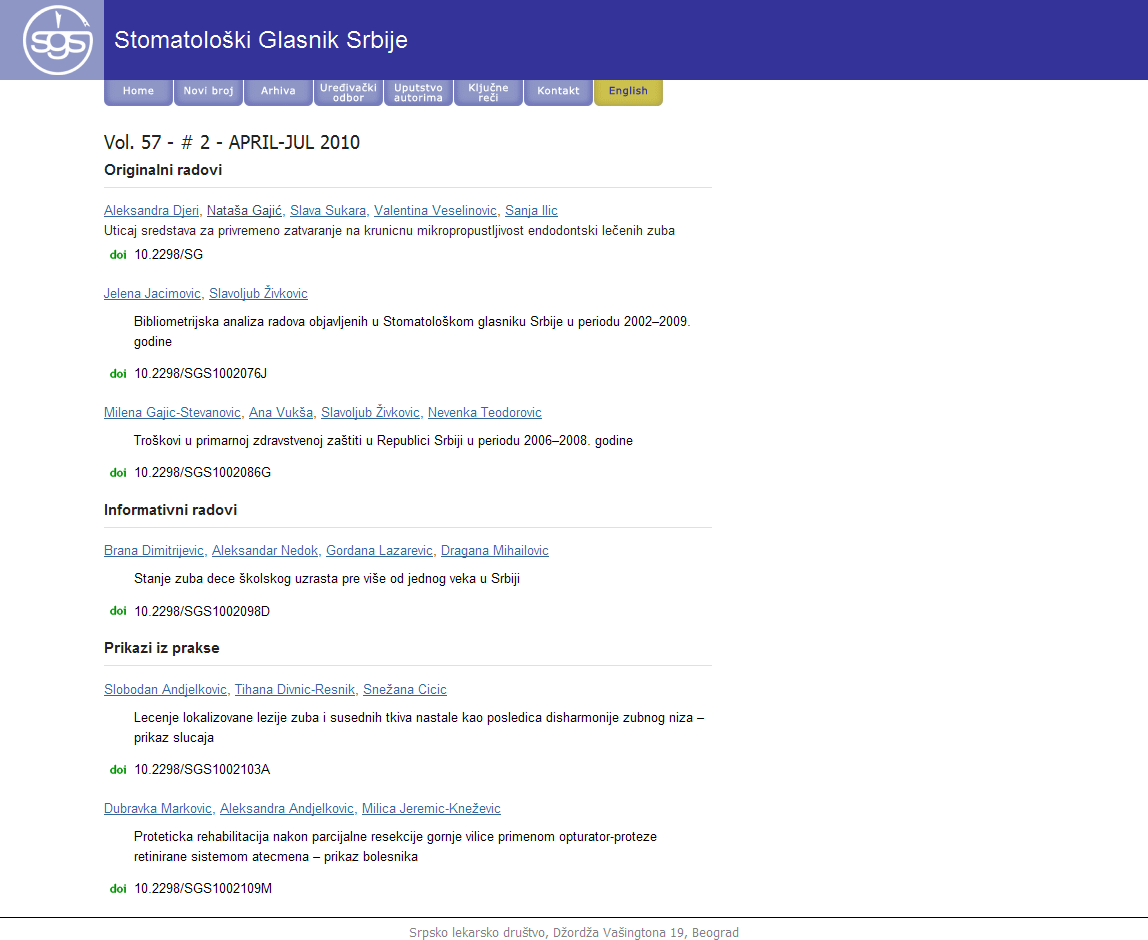
  • Serbian Dental Journal

    Serbian Dental Journal

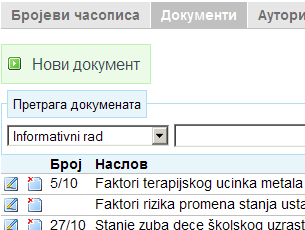
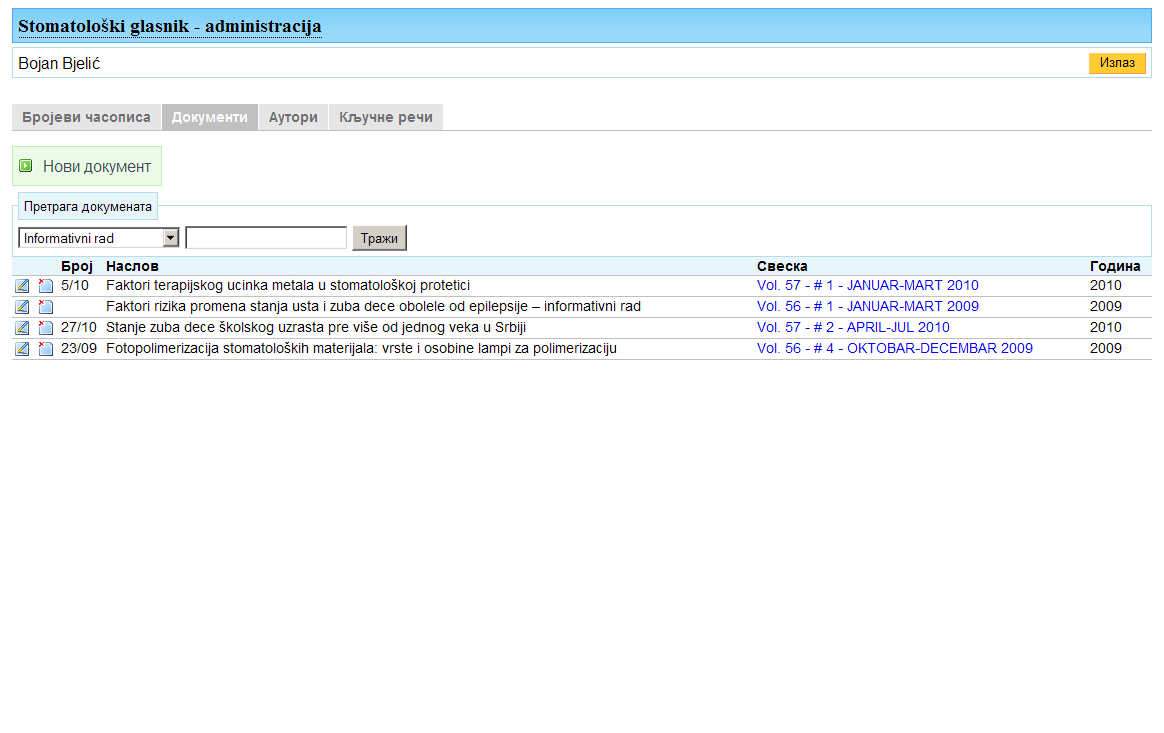
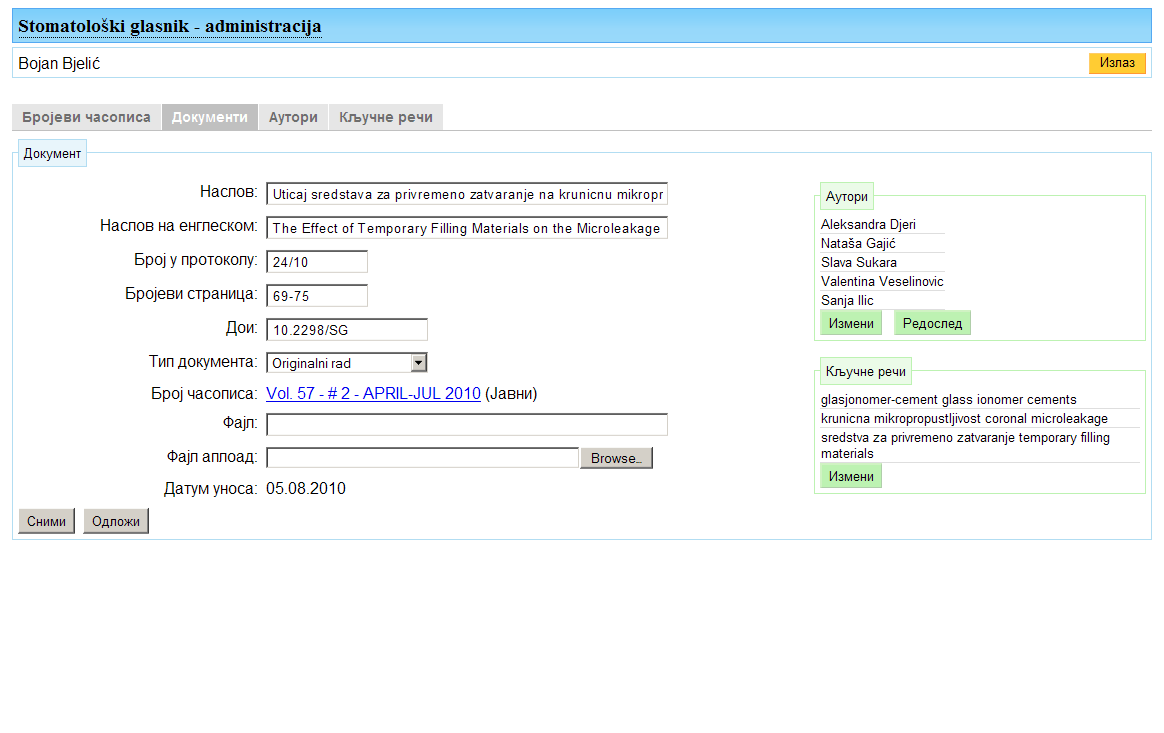
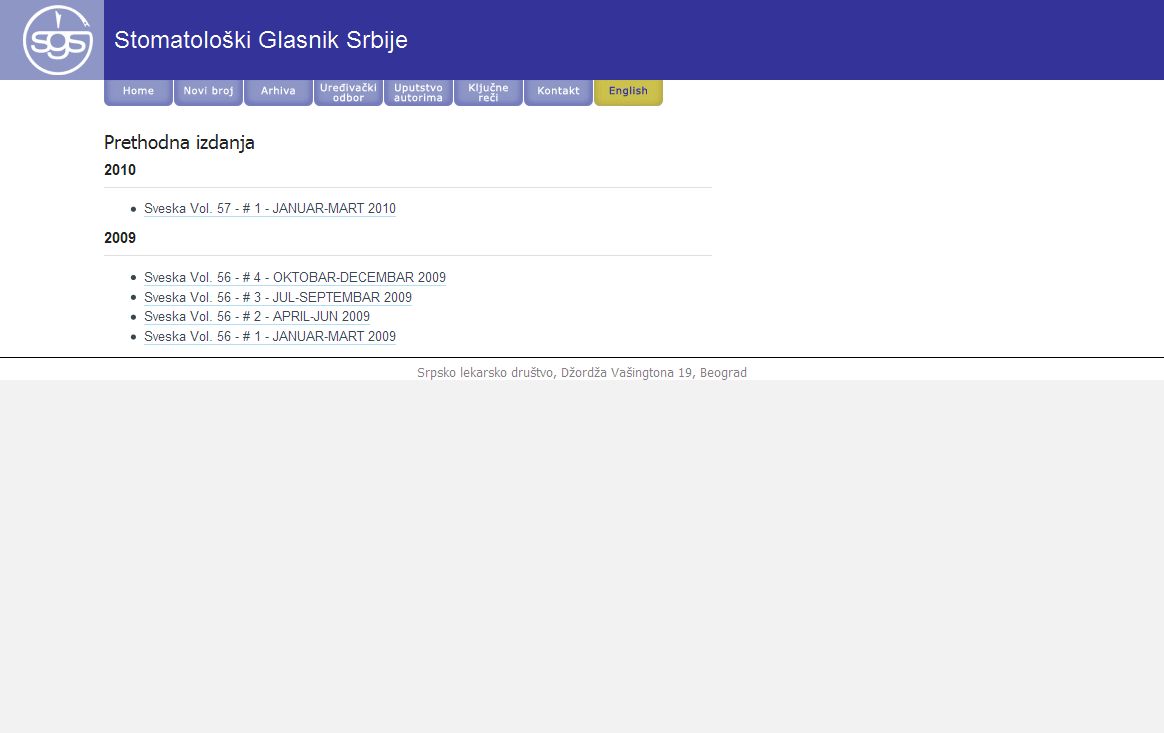
    Document processing system, for more details please have a look on the [permalink href=”127″]Serbian Archives of Medicine[/permalink] project page.

  • Matchpoint

    Matchpoint

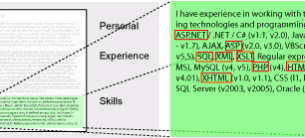
    During 2007 and 2008 I worked on a document analysis tool called “Matchpoint”.

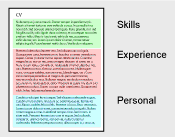
    The idea is to parse the document by identifying content blocks and then find certain keywords within the context. The document is tagged based on the found information.
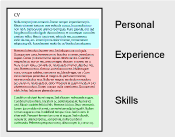
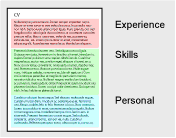
    I did the software architecture first, creating the concepts, entities and relations,and identifying crucial parts of the system.
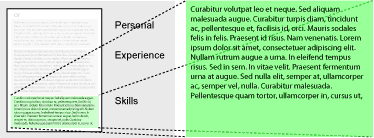
    The heart of the system is the parsing engine that identifies segments of document, for example education, experience, and so on. All the permutations of the segments are used, and the one that matches the most segments is selected for further analysis. Each of the recognized segments is then searched for the keywords. Each keyword has appropriate tags assigned, and this way the document is in the end tagged.

    Since the algorithm has to analyze documents in different languages, using semantic algorithms seemed a bit too complicated, so I went with regular expressions.
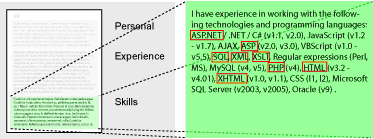
    The documents can be emailed or uploaded by FTP to the web server, where is a Windows service monitoring configured folder. A .NET console application is then run to convert document to plain text using IFilters, and then to run the analysis, and upload the data to the Microsoft SQL Server database in the end.

    Users can use a web application built on ASP.NET Web Forms to search and view indexed documents.

  • Adverto Mystery Shopping

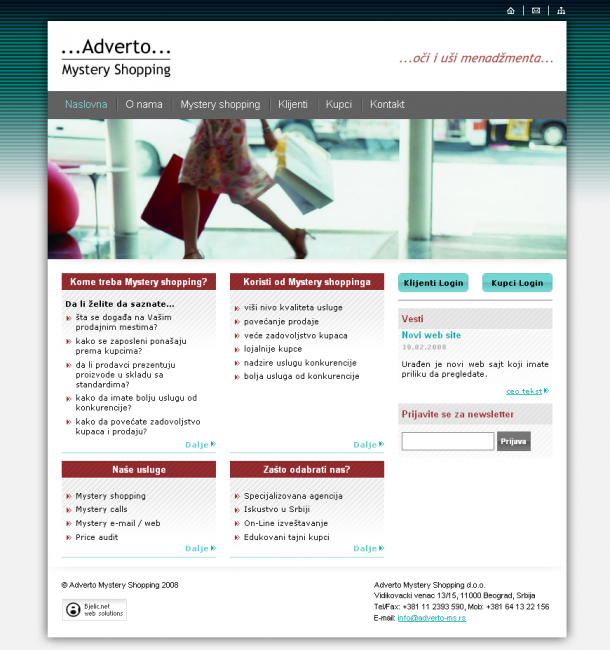
    Adverto Mystery Shopping

    In the winter of 2008, I collaborated with my old friend Goran Petrović, to create a website for his company “Adverto Mystery Shopping”.

    We brainstormed the information architecture, and afterward I created a rudimentary CMS to maintain the content.

    As he was using an application for his business that was written using ASP.NET 1.1, it was a requirement for the web site as well. The markup is XHTML compatible as much as ASP.NET 1.1 WebForms allow, styled using CSS, and interaction improved using JavaScript and MooTools.

    You can have a look in more detail at www.adverto-ms.rs.

  • Car trading B2B

    Car trading B2B

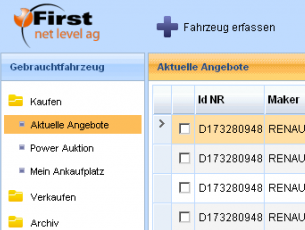
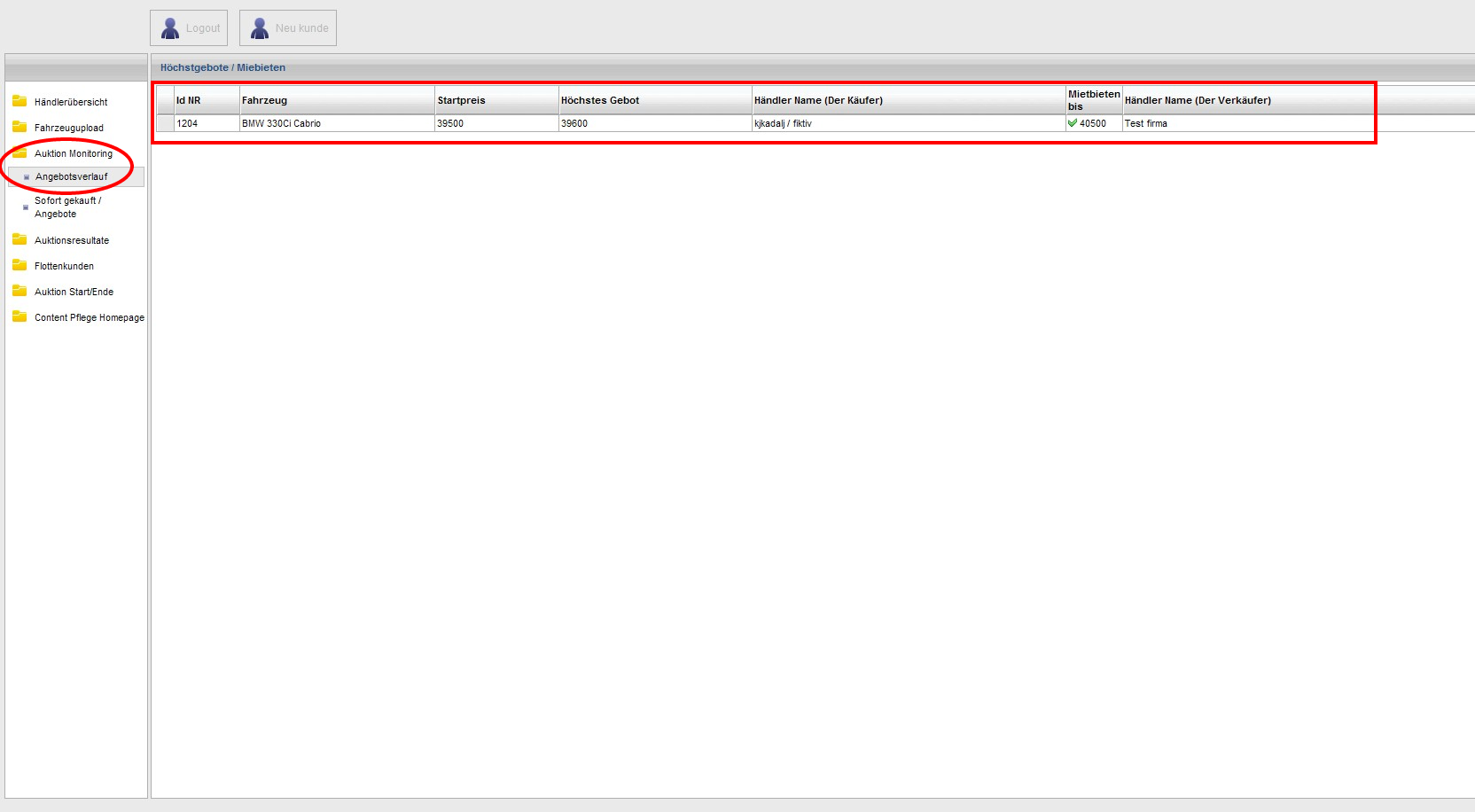
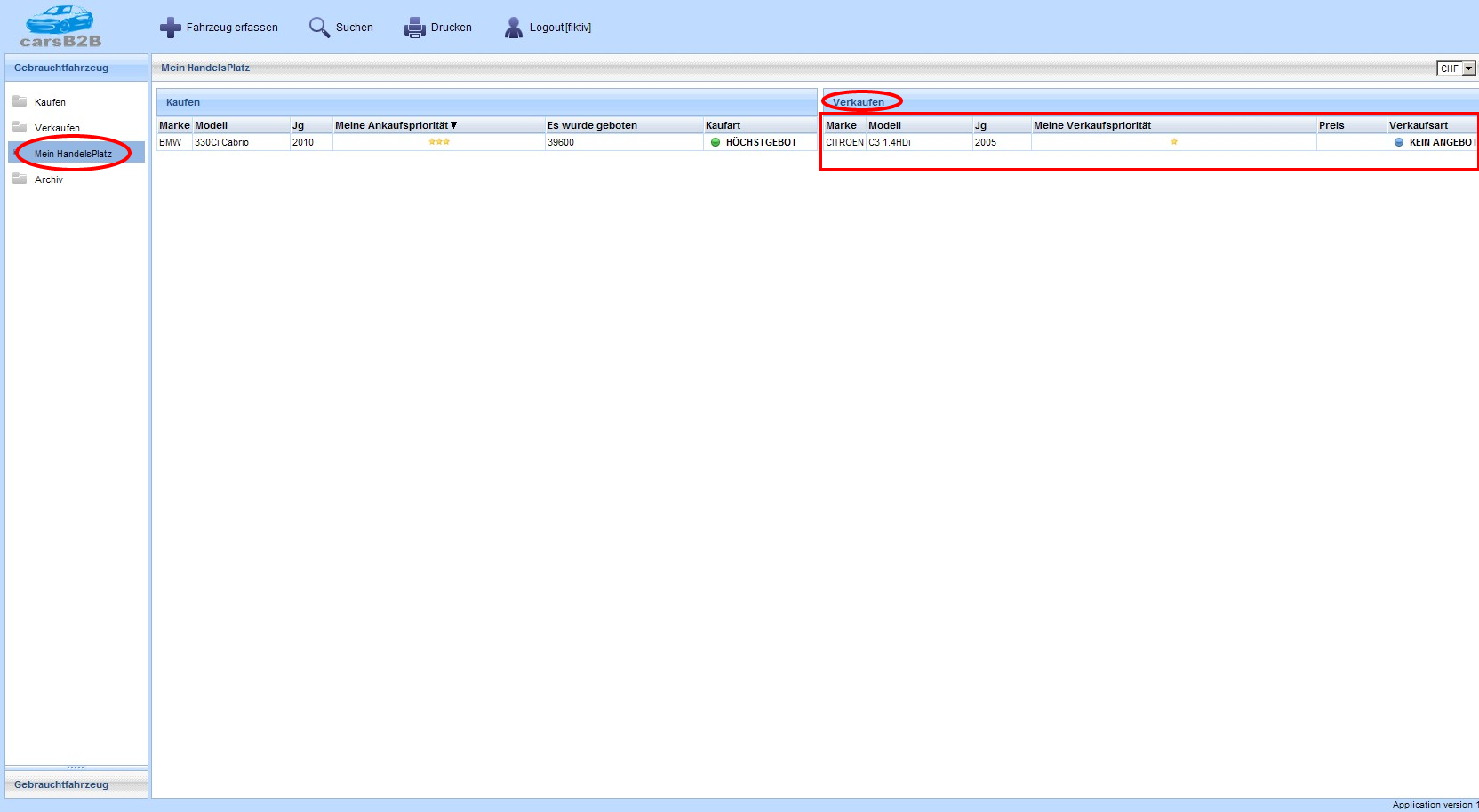
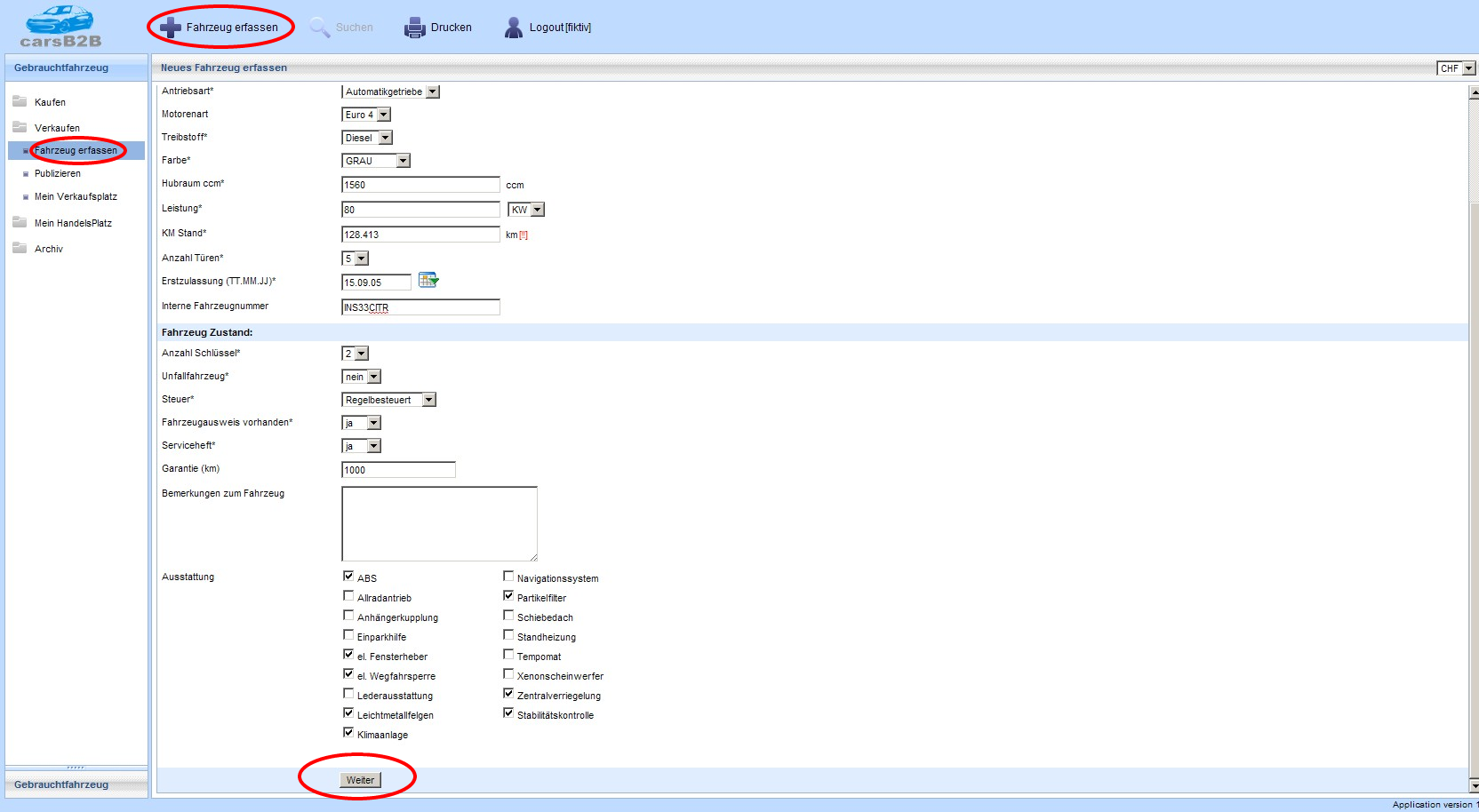
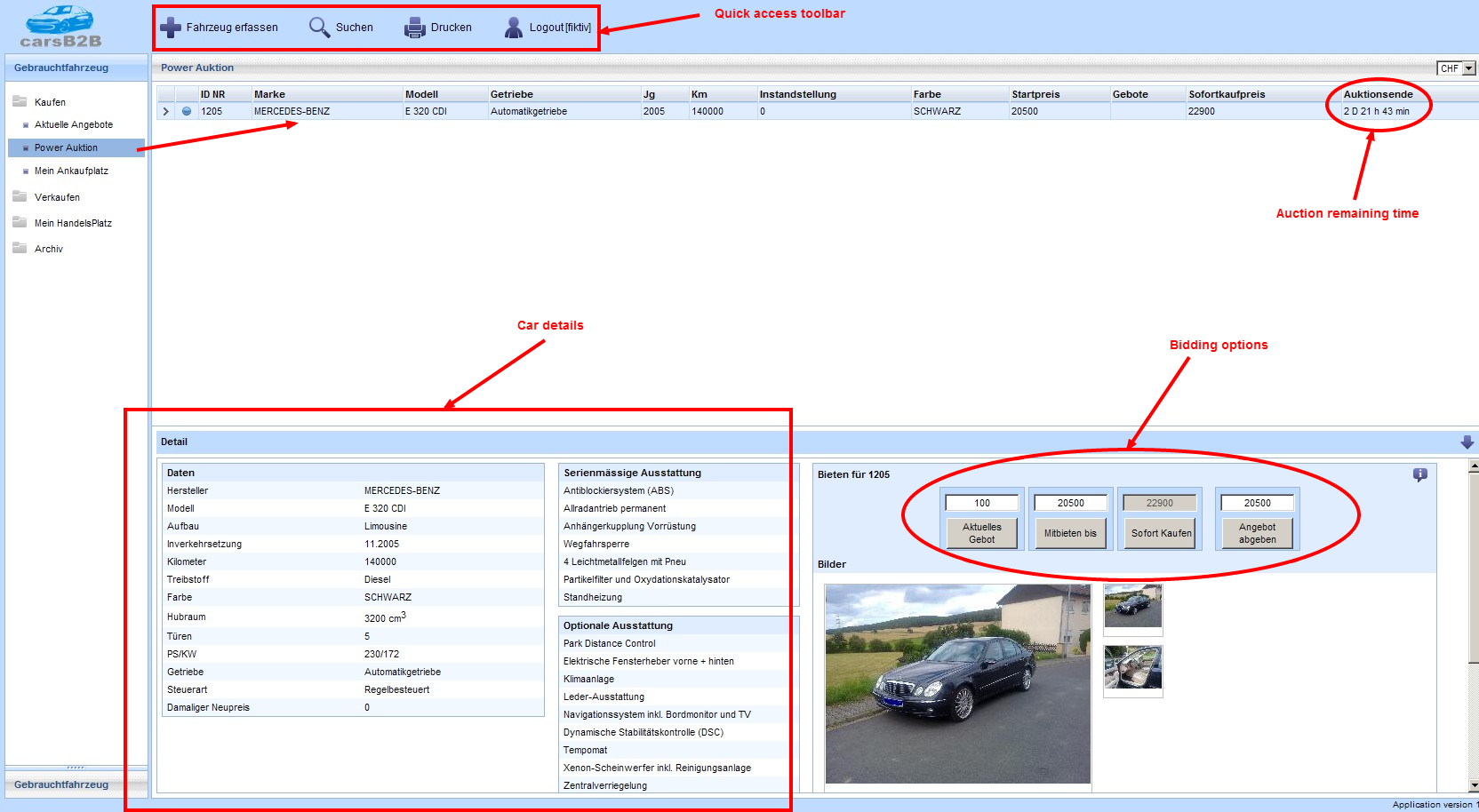
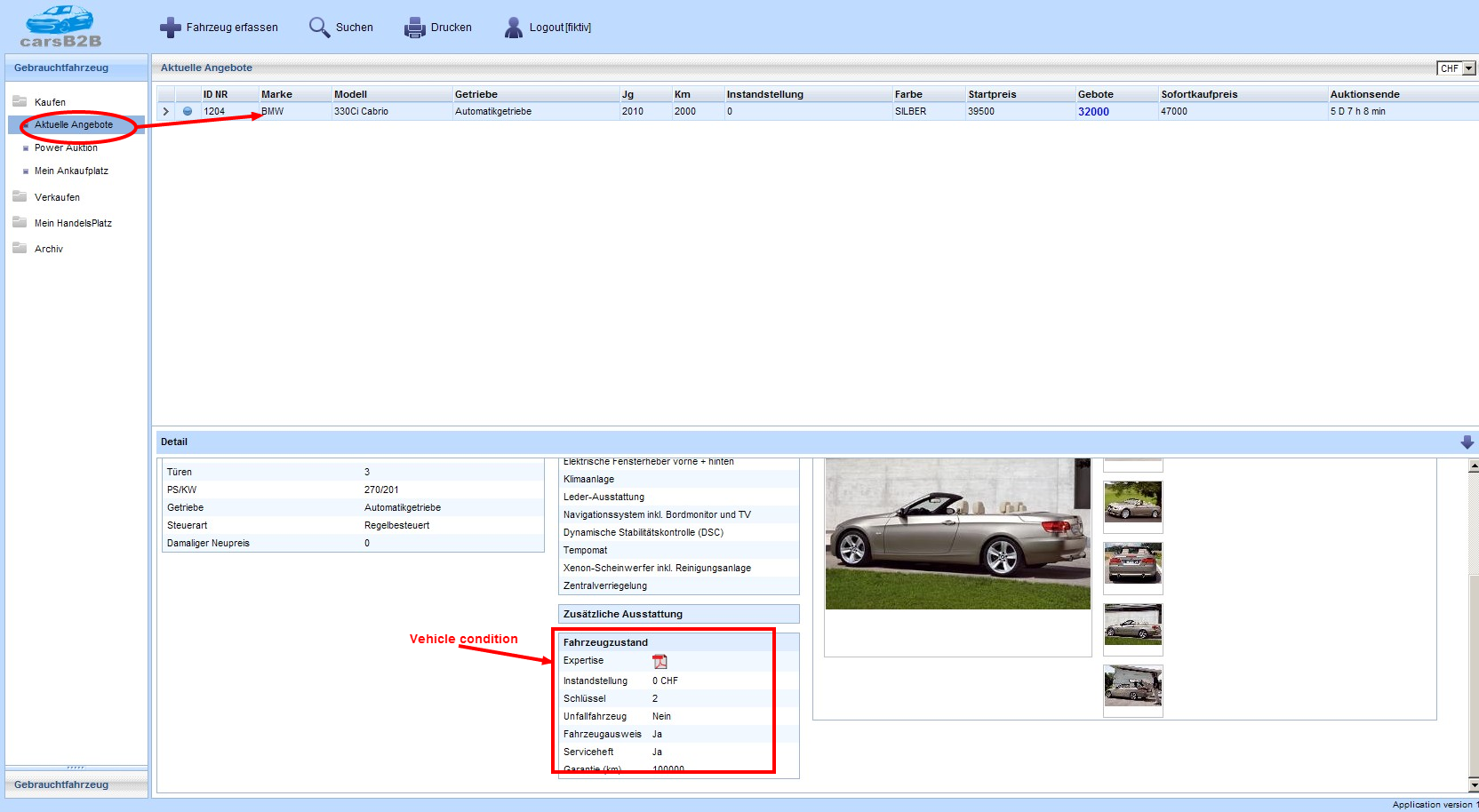
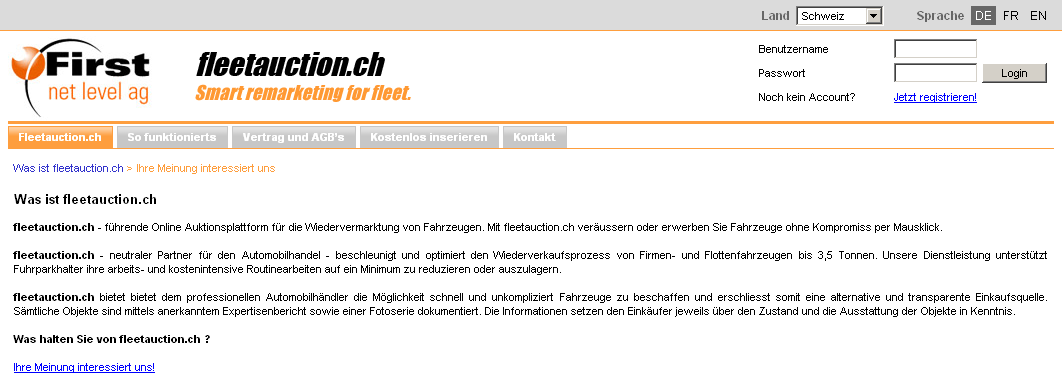
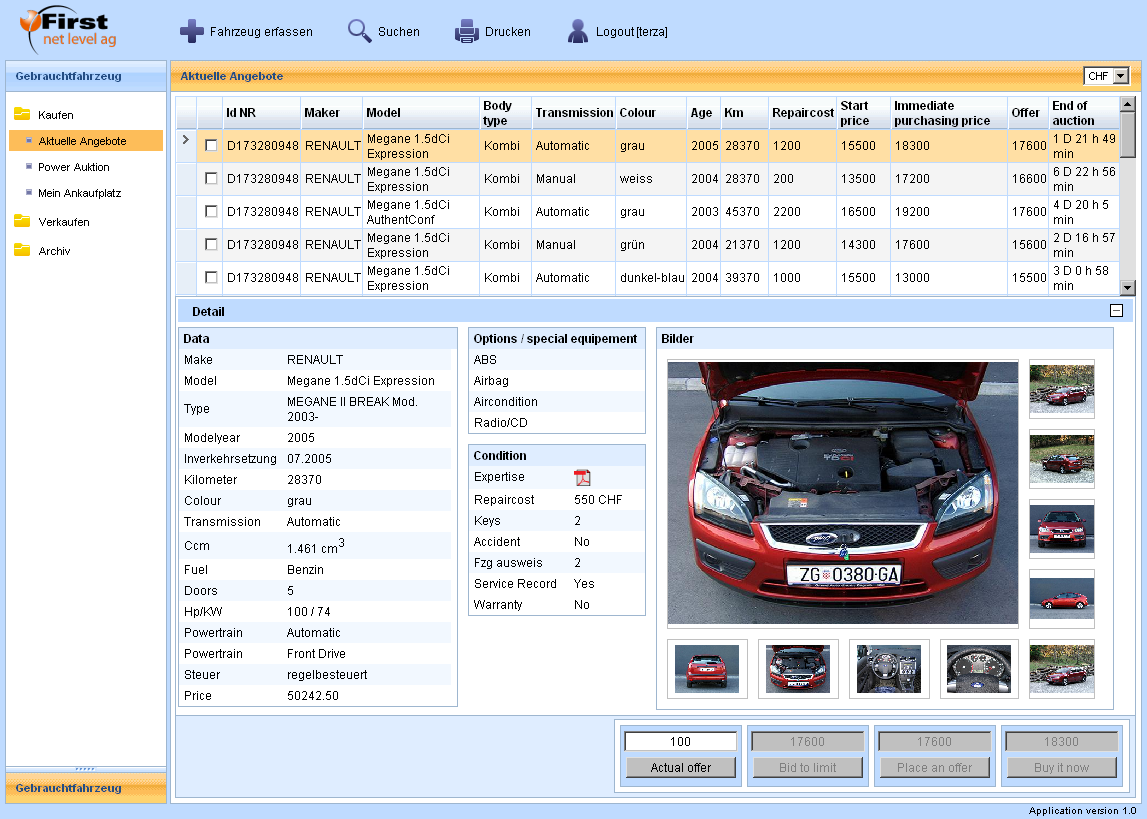
    During 2oo8 I worked on the vehicle auctioning platform for a Swiss company.

    Frequent discussions with my close associate Saša Klačar, who did the requirements collection and communication with the client, resulted in well documented software architecture.

    After defining the system entities and relations, I managed a team of experienced developers went on to implement the system using ASP.NET Web Forms for the front-end, .NET, C# and SubSonic for the middle tier and Microsoft SQL Server as the back-end.

    I have also designed the database, scripted SubSonic, implemented a part of DAL, and created a Windows service for XML data imports from an external source.

    Following the loose Agile process, we have first released a user interface mock-up, which triggered several system redesigns and resulted in better specification in the following releases.

    The better part of the project was done, but it was at a point stopped by the client, even as they were very satisfied with our results, but it was caused by the company’s internal problems.